
ROYAL AUTOMOBILE CLUB ANNOUNCES FINALISTS OF MOTORING BOOK OF THE YEAR
ROYAL AUTOMOBILE CLUB ANNOUNCES FINALISTS OF MOTORING BOOK OF THE YEAR The Club has revealed the finalists for its 2025 Motoring Book of the Year Awards, widely regarded as the most prestigious accolades in motoring and motor racing literature. Now in their twelfth year, the Awards continue to celebrate excellence across the entire spectrum of motoring publishing – from autobiographies and marque histories to technical works and even a children’s book. The winners, including the coveted overall Motoring Book of the Year, will be announced at a special ceremony at the Club’s historic Pall Mall clubhouse on Wednesday, 29 October 2025. Jeremy Vaughan, Head of Motoring at the Club, commented: “We founded these Awards in 2013 to recognise excellence and celebrate success in the motoring literary world. They have become the Oscars of the motoring book world, and each year we are thrilled by the quality and breadth of entries. Our sincere thanks go to the judges, who had an especially tough task this year narrowing the field to this exceptional shortlist.” Books published between 1 July 2024 and 30 June 2025 were eligible, with categories covering both motoring and motor sport subjects in affordable and premium editions. In addition to the category winners, the judges will present the overall Motoring Book of the Year Trophy to the single title they believe stands above all others, while the Graham Robson Trophy will honour the Best Debut Author. The Lifetime Achievement Award will recognise an individual’s outstanding contribution to the world of writing and publishing about motoring and motorsport. Simon Taylor, Chairman of the judging panel, added “This has been a bumper year for entries, the biggest in the Awards’ history with fifty books submitted from major publishers to independents and self-published authors. The debate was lively, with each title judged for originality, research, writing style, illustration quality, and production values. It has been a delight to see such impressive and diverse titles across all categories, and the calibre of the finalists is exceptionally high.” In strictly alphabetical order, the Royal Automobile Club Motoring Book of the Year 2025 finalists are: Books About Motor Cars & Motoring (under £50.00) DeLorean: The Rise, Fall and Second Acts of the DeLorean Motor Company – Matt Stone (Motorbooks, £30.00) Ford Mustang 60 Years – Donald Farr (Motorbooks, £40.00) Meyers Manx 1964–2024 – Basem Wasef (Hothouse Media, £49.50) Super3 Design by Adventure – Andy Plumb (Lead-in Design Ltd, £49.99) Books About Motor Cars & Motoring (no price limit) Joseph Figoni: Le Grand Couturier de la Carrosserie Automobile Vol. II–IV: Bugatti – Peter M. Larsen & Ben Erickson (Moteurs!, £650.00) Power Unleashed: Trailblazers who Energised Engines with Supercharging and Turbocharging – Karl Ludvigsen (Evro Publishing, £395.00) Spy Octane: The Vehicles of James Bond (Vol. 1) – Matt Field & Ajay Chowdhury (Porter Press International, £99.00) The Magic of a Shadow – Davide Bassoli (Nubes Argentea, £215.00) Motor Sporting Subject (under £50.00) A.J. Foyt – Vol. 1: Survivor, Champion, Legend – Art Garner (Octane Press, £37.00) Forever Young: Six Lost Talents of Motor Racing – Ian Wagstaff, Andrew Marriott, Jon Saltinstall and Darren Banks (BHP Publishing, £40.00) Racing Legends: Lando Norris – Maurice Hamilton (Macmillan Children’s Books, £6.99) The Grand Prix Year: An Insider’s Guide to Formula 1 Racing – Phillip Horton (Bloomsbury, £20.00) Motor Sporting Subject (no price limit) On the Prowl: The Definitive History of the Walkinshaw Jaguar Sports Car Team – Neil Smith (David Bull Publishing, £100.00) My Travels On Racer Road: Can-Am and Formula 1 in their golden age – Pete Lyons (Evro Publishing, £70.00) Texas Legend: Jim Hall and his Chaparrals – George Levy (Evro Publishing, £60.00) Ultimate Ford GT40: The Definitive History Vol. 1 – Ronnie Spain (Porter Press International, £325.00) Best Debut Author (Graham Robson Trophy) De Tomaso: Racing Blue Blood – Alejo Pérez Monsalvo & Marcel Schaub (McKlein Media, £295.00) Driving the Dragon: The Rise of the Chinese Car Industry – Mark Andrews (Veloce/David & Charles, £19.99) Le Mans 2000-09: The Official History of the World’s Greatest Motor Race – John Brooks (Evro Publishing, £70.00) On the Prowl: The Definitive History of the Walkinshaw Jaguar Sports Car Team – Neil Smith (David Bull Publishing, £100.00) Judging Panel The Awards are judged by six experts who are independent of the Royal Automobile Club, and represent the UK’s most informed motoring literary critics, including Mick Walsh (Classic & Sports Car), Damien Smith (Motor Sport), Mark Dixon (Octane), Ian Titchmarsh (British Racing Drivers’ Club) and representing the retail sector Ben Horton (Horton’s Books), and Christian Whitehead (Blackwell’s). The judging panel is chaired by respected motorsport writer, commentator and historian Simon Taylor. The Awards form part of the Royal Automobile Club’s London Motor Week (27 October – 2 November 2025), which culminates with two landmark public events. On Saturday 1 November, the St James’s Motoring Spectacle will see Pall Mall closed to traffic for a free, one-day celebration of motoring past, present and future, showcasing the latest in automotive technology and career opportunities while also acting as a preview to the following day’s RM Sotheby’s London to Brighton Veteran Car Run. Held on Sunday 2 November, the Run is the world’s longest-running motoring event, now in its 129th year, and begins at dawn in Hyde Park.
VICTOR RILEY 1935-2025
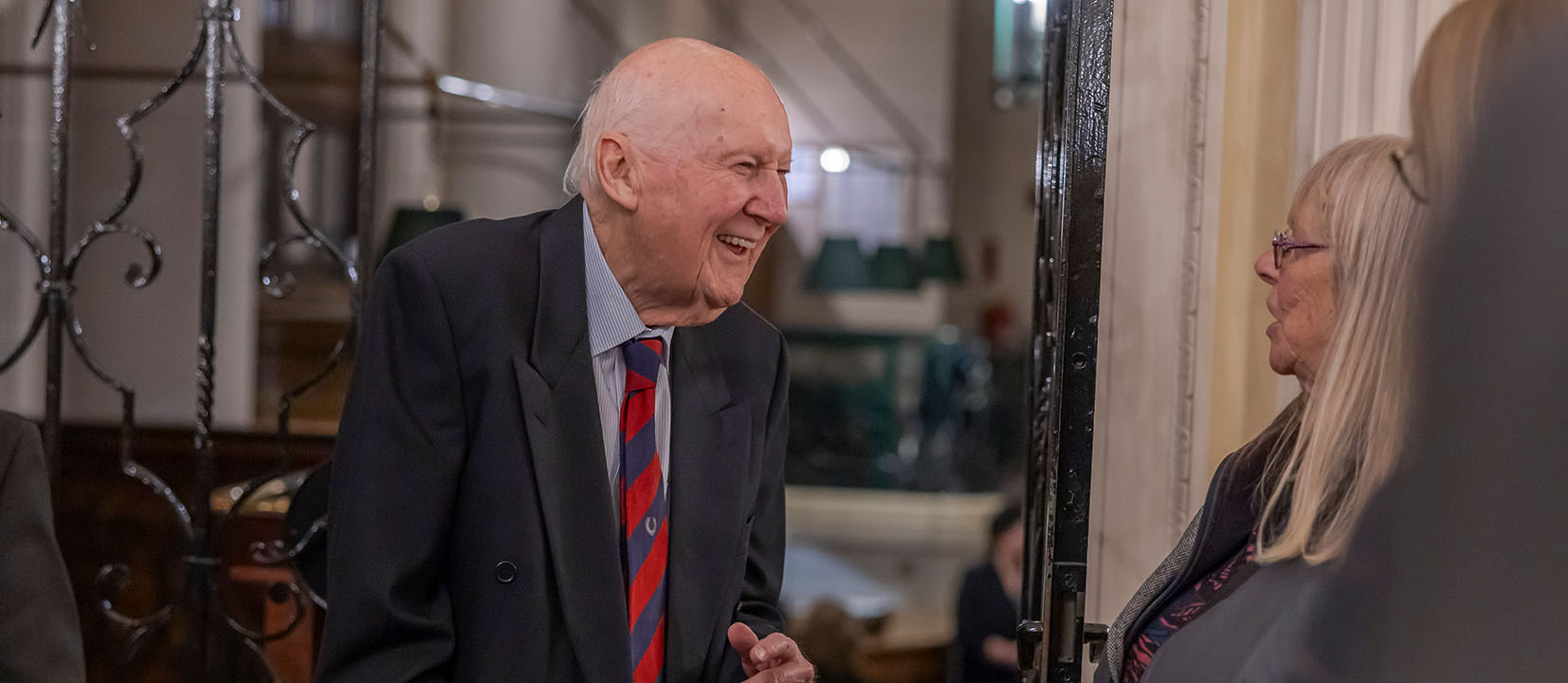
Victor Riley 1935-2025 Victor Riley was one of the last genuinely direct links with the founding fathers of the British motor industry. He knew his grandfather William Riley when the old man was 90 and Victor was five in 1939, and even then found the Victorian industrialist a little intimidating. William Riley Jnr was the latest in a long line of Coventry weavers when, in 1890, he joined the goldrush in bicycle manufacture that was sweeping Coventry. Yet it was his five sons (including Victor’s father, also known as Victor) who transformed the business into car-making 15 years later, initially against his will. This soon led to the exceptional Riley Nine in 1927 that brought commercial success and motor racing laurels. Victor Riley, born in 1935, was too young to join the family firm, which was sold to Lord Nuffield in 1938, instead following a career in component manufacturing with what became a part of GKN. But his passion was always the Riley marque, which he expressed through owning the cars and campaigning unceasingly to keep interest in them alive. In the 1990s, his efforts almost succeeded in a revival of the marque under BMW. He did, however, help establish a permanent home for The Riley Archive in Coventry’s Canal Basin, pouring his energy into raising funds and promoting it at dinners and in local schools. He also initiated a replica of the very first car (the original having been lost) that was designed by his Uncle Percy when he himself was a 16-year-old schoolboy. Victor carried this same sense of tradition into his daily life. He travelled the country by train, right up until last year, and never owned a mobile phone or used email. Everything with Victor was done by letter or by telephone call – even event reservations. Victor became a Club member on 24 November 1958 at the age of 23, when his family purchased Life Membership for him. In January 2016, he proudly joined the Senior 100. Over the years, he was a vibrant and dedicated presence at Club events – full of energy and warmth, generous with his time, and always enthusiastic about keeping the Riley spirit alive. We will remember him not only as a custodian of the marque’s history, but as a kind and engaging friend whose enthusiasm drew others in. Our condolences go to his family and friends.
CLUB CONTRIBUTES TO NEW POLICIES AT DVLA THAT SUPPORT THE CLASSIC CAR INDUSTRY
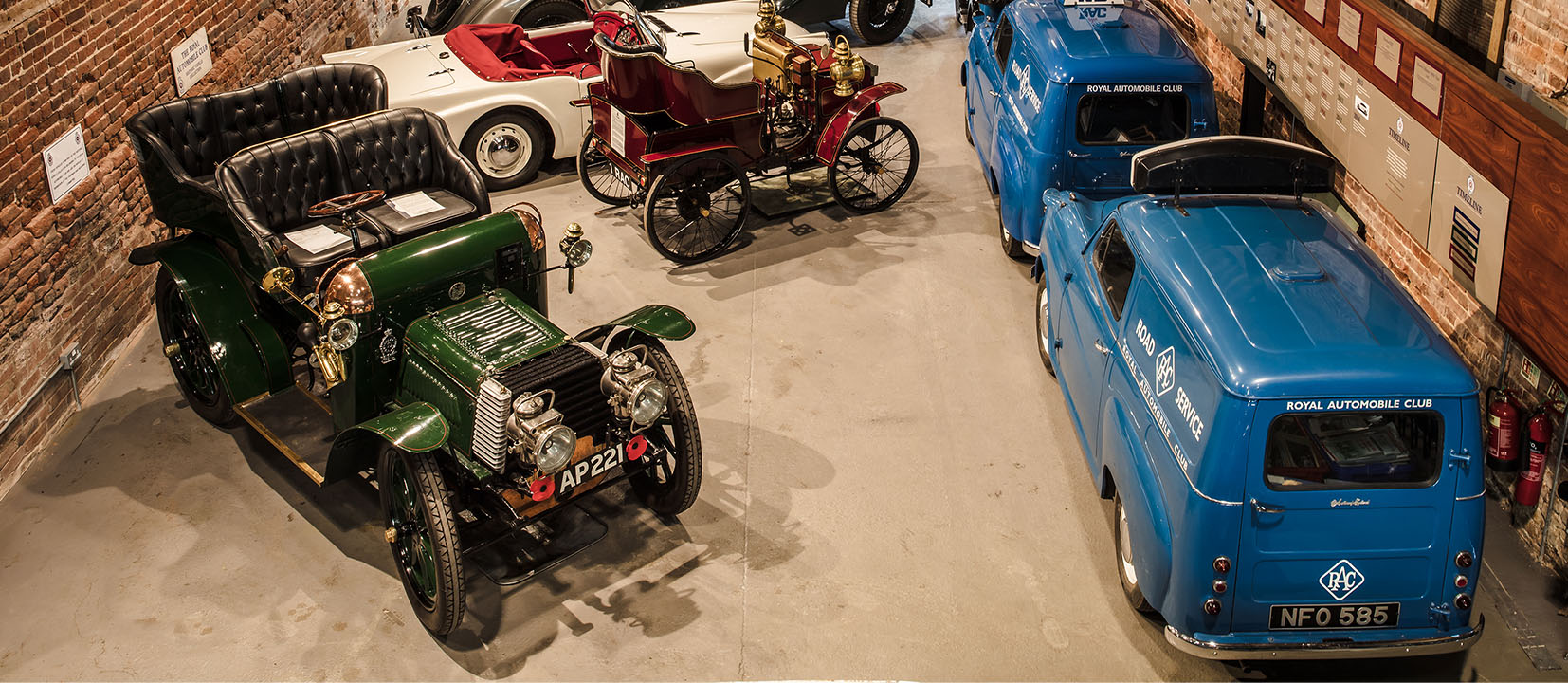
Club contributes to new policies at DVLA that support the Classic Car industry This is great news for owners and enthusiasts anxious to keep their car’s identity after major restoration or conversion work. The Driver & Vehicle Licensing Agency (DVLA) has listened to genuine concerns highlighted by the Royal Automobile Club and other organisations on behalf of the historic car sector and reframed its policies, rewarding what Minister for the Future of Roads Lilian Greenwood calls the “love, time and effort” that goes into keeping veteran, vintage and classic vehicles on the road. The Club has engaged with the DVLA since 2020 and was a Founder member of the Historic Vehicle User Group (HVUG) that has been central in developing the new changes in policy. For cars that have been repaired or restored back to their original working specifications, owners are no longer required to notify the DVLA of the work. This is on the condition that components or body panels are replaced on a strict like-for-like basis, and that the appearance of the car is faithful to how it was when brand new. It is also dependent on none of the Vehicle logbook (V5C) details being affected. Meanwhile, cars that have received major modifications must still have these alterations – such as cutting into the structure, bodywork changes, non-standard engines, or conversion to using an electric drivetrain – notified to the DVLA. However, such vehicles will now be able to keep their original Vehicle Identification Numbers (VIN) and registration numbers. The new policies come into effect on Tuesday, 26 August, and are seen as a vote of confidence in the wider historic car industry and modern restoration techniques. The DVLA says the revised policies make it ‘significantly easier for enthusiasts to register repaired, restored and modified vehicles.’ “These changes are about cutting red tape and making life easier for enthusiasts, whether you’re restoring a vintage gem or converting it to electric,” added Lilian Greenwood. “It’s all about celebrating the UK’s amazing motoring heritage and helping the industry thrive well into the future.” “The Royal Automobile Club is delighted that it can still support motorists 128 years after it was founded and welcomes these positive measures that will support the Historic Car movement”, said the Chairman of the Royal Automobile Club, Duncan Wiltshire. Further Information
NICK TANDY AWARDED SEGRAVE TROPHY FOR EXTRADORINARY MOTORSPORT ACHIEVEMENTS
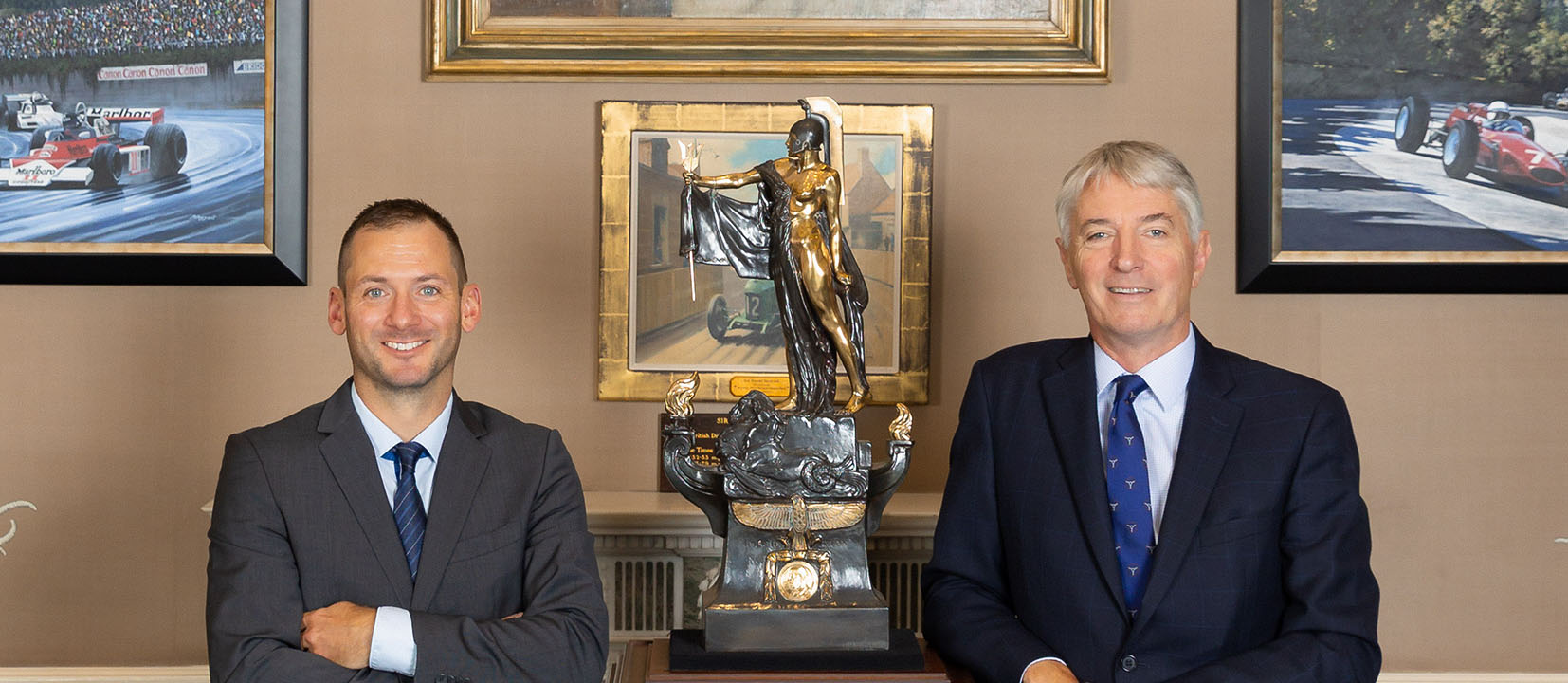
Nick Tandy Awarded Segrave Trophy for Extraordinary Motorsport Achievements Nick Tandy was visibly moved when he received the Segrave Trophy on Wednesday at a celebratory lunch in Pall Mall, attended by his family, friends, on-track rivals, and many previous Segrave winners. He described the accolade as “an unofficial knighthood of motorsport” and reflected on how humbled he felt as its new holder. “You don’t realise at the time what you’re doing means within the global reach of motorsport,” he said. The Club awarded the tenacious British racing driver the Segrave Trophy in recognition of his outstanding achievements in global endurance racing. Named after adventurous trailblazer Sir Henry Segrave – the first man to hold both the land and water speed records simultaneously – the Trophy is awarded annually to the British or Commonwealth individual or team demonstrating outstanding skill and courage on land, water, in the air or in space. Past recipients include luminaries such as Sir Malcolm Campbell MBE, Sir Stirling Moss OBE, Richard Noble OBE, Sir Lewis Hamilton MBE and Colonel John Blashford-Snell CBE. Nick’s racing career is a story of perseverance and passion. From humble beginnings in British grassroots motorsport, he steadily climbed the international ranks to become one of endurance racing’s most respected figures. His first landmark victory came at the 2015 24 Hours of Le Mans, piloting the No 19 Porsche 919 Hybrid to an unforgettable win. He followed that with 24-hour triumphs at Nürburgring in 2018, Spa in 2020 and, finally, Daytona in 2025 – completing a rare and remarkable sweep of endurance racing’s crown jewels. This impressive race record underscores a career defined by talent and grit. An informal Q&A followed the Trophy presentation, led by endurance-racing veteran – and himself a previous Segrave Trophy winner – Martin Brundle. When asked the secret to success, Nick observed: “Belief is everything… if you don’t believe you’re going to win, you’ll be beaten by someone who does.” He also emphasised the importance of trust in endurance racing: “You’re putting victory in someone else’s hands, too.” Allan McNish, another Le Mans victor and remarkable double Segrave Trophy winner, was drawn into the conversation, fondly recalling watching Nick at Le Mans in 2015, where he was racing a GT car in a slower category. In torrential rain – “more akin to Knockhill” – Nick delivered a flawless drive, and astonishingly won the race outright. It’s a feat rarely, if ever, achieved in a lesser-class car. Allan pointed to adaptability as the key in such moments – something Nick clearly has in spades. In his closing remarks, Nick thanked the work of his team, highlighting the immense of support of his teammates, engineers, mechanics and, most importantly, his family along the way. The honour, he said, “goes above and beyond anything I thought I’d achieve in my career… it’s incredible to be part of this Trophy’s tradition.”
FROM PALL MALL TO PIT LANE: THE CLUB AT DONINGTON HISTORIC FESTIVAL
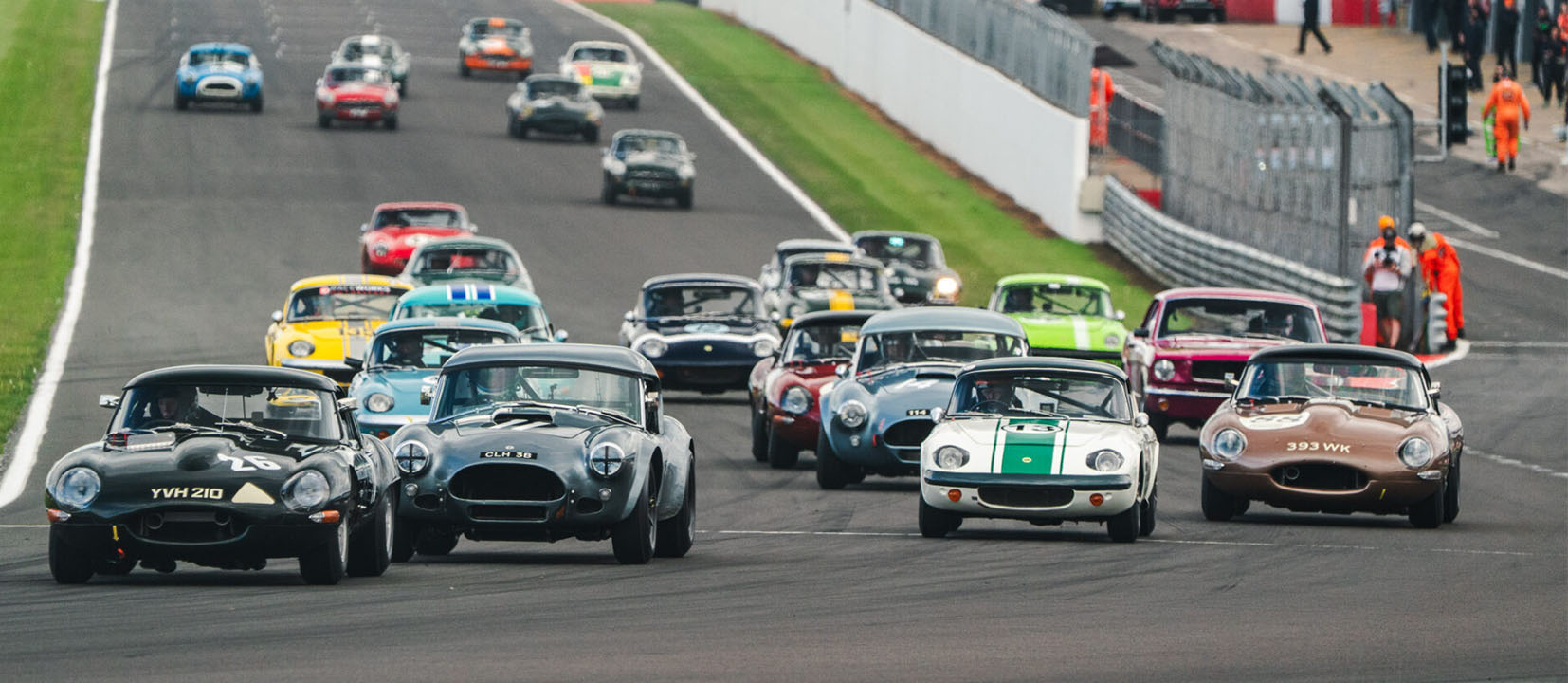
From Pall Mall to Pit Lane: The Club at Donington Historic Festival Over the bank holiday weekend, our motoring correspondent Alice Locke caught up with some of the Club’s racing members at the ever-brilliant Donington Historic Festival. The spotlight was on the Pall Mall Cup, proudly supported by the Royal Automobile Club. One of two Motor Racing Legends series run in association with the Club, the Pall Mall Cup takes its name from the Club’s historic London home and celebrates the golden era of endurance racing. The grid featured a glorious mix of pre-’66 GT, GTS, and touring cars, plus pre-’61 sports-racing machinery, all battling over a flat-out, two-hour race. To add some spice (and strategy), each team of two or three competitors had to make two pit stops – one quick and one longer refuelling stop of five minutes. Variety, as ever, was the order of the day. And this round certainly served up an all-star cast: E-types, Cobras, Elans, MGBs galore – plus a mighty Mustang, a feisty TVR Grantura, and a vanishingly rare Porsche 901. Friday began with glorious but cool sunshine – ideal conditions for qualifying and a welcome respite from the previous sweltering days. Among the Club contingent Frederic Wakeman, sharing a Cobra with two team-mates, made the most of the perfect conditions. With blistering pace and impressive consistency across all three drivers, they bagged second on the grid. In endurance racing, consistency is key, and these three were all within a few seconds of each other. But as if hurling a Cobra around wasn’t enough for Frederic, he also strapped into an Audi GT3 and then a Cooper T38 alongside fellow Club member Patrick Blakeney-Edwards for the other Club-backed series: the Woodcote Trophy. Jumping between cars with wildly different handling, braking and grip is no small feat, but Frederic clearly relishes the challenge. He praised the use of Donington Park’s full Grand Prix circuit, saying the lesser-used layout made for an exciting change. Though his Cobra sadly retired just nine laps into the Pall Mall Cup, Frederic’s weekend wasn’t over. He and Patrick bounced back to win the Woodcote Trophy despite a drive-through penalty for a too-early driver change. As that series runs as a championship, the win put them in a strong position for the rest of the season. Also in the mix was Club member Karsten Le Blanc, behind the wheel of the stunning Porsche 901, shared with two teammates. A stalwart of the Pall Mall Cup since its early days, Karsten’s standout memory remains the post-lockdown comeback race, where he and his “Covid cycling group” took the win. This weekend, he too was double-duty, switching between the 901 and an Austin-Healey 3000. Karsten praised the high driving standards and the warm hospitality, calling the Pall Mall Cup a perennial favourite. He also tipped his hat to the new two-hour format, calling it kinder on the old machinery. There was an added incentive for the Pall Mall Cup in the form of a special prize for the first Club member to cross the line. That honour went to Simon Drabble, who shared his MGB with his son Alex – earning them two Club-branded caps and dinner at the Club. Simon also scooped second in class, crediting it to sharp strategy and an even sharper pit stop. Hot on Simon’s heels came another MGB – this one piloted by Club member Richard Locke (yes, my dad and co-driver!). Taking part in his very first Pall Mall Cup, Richard thoroughly enjoyed the experience and was impressed by the remarkable driving standards: no red flags, no safety cars, and barely a yellow flag was seen across the two-hour race. The weekend ended on dual high notes, with top-notch hospitality and a live band belting out classic hits. The next outing for the Pall Mall Cup will be at the Navarra Historic event in Spain this October, ahead of the season finale at Silverstone. The Woodcote Trophy will also feature at both, with additional rounds at Silverstone Festival and Spa-Francorchamps beforehand.
ANNUAL MOTORING DINNER INTERVIEW WITH ZAK BROWN
LEGENDS REUNITED AS ROYAL AUTOMOBILE CLUB HONOURS PRODRIVE
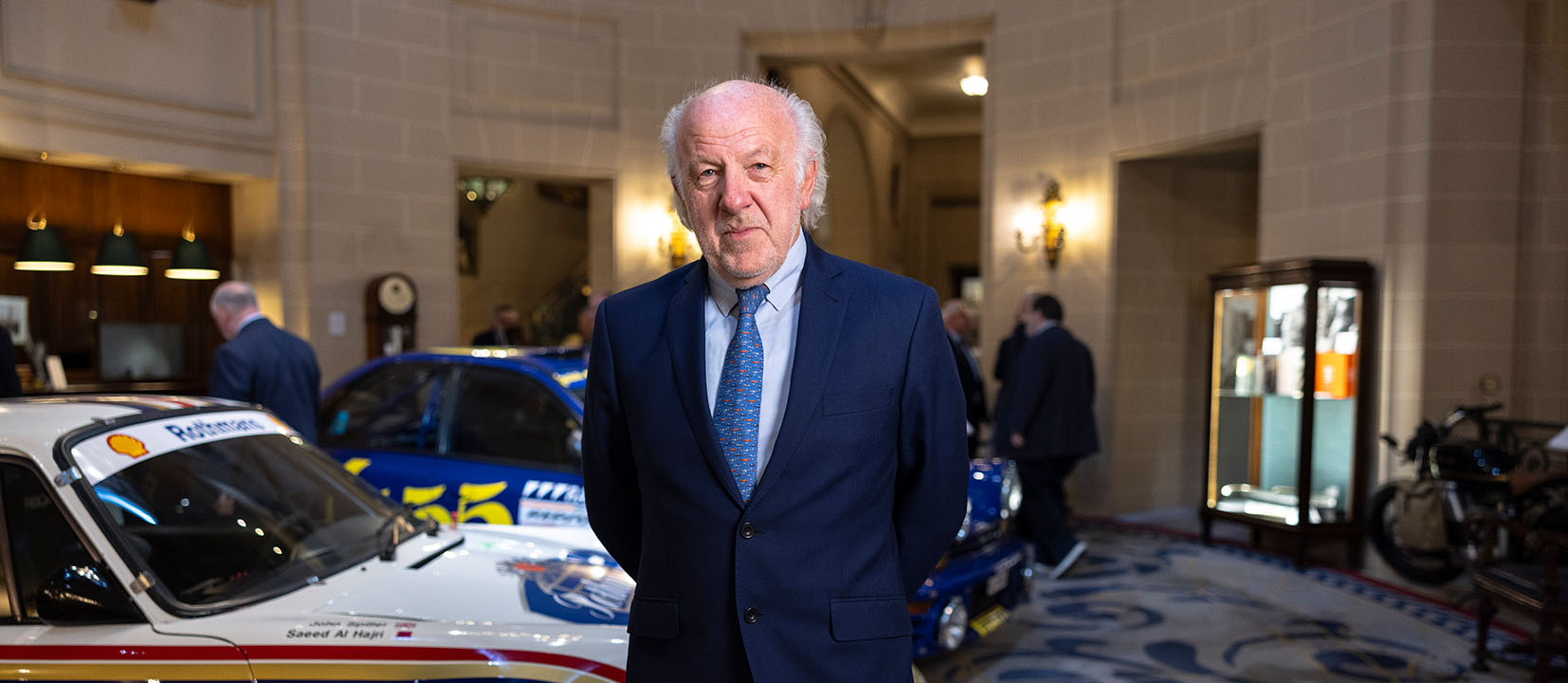
Legends Reunited as Royal Automobile Club Honours Prodrive An incredible line-up of motorsport heroes gathered in London as the Royal Automobile Club presented Prodrive with its Diamond Jubilee Trophy on Thursday 31 October. The celebratory atmosphere at the Pall Mall Clubhouse reflected the great esteem in which the British company is held, as everyone reminisced into the early hours about 40 years of Prodrive success in rallying, sports-car racing, touring cars and Formula 1. First awarded in 1957, when the Royal Automobile Club celebrated its 60th anniversary, the Diamond Jubilee Trophy is only occasionally given for ‘An outstanding contribution in the field of automotive transport or motorsport’. This year’s event represented just the seventh time the Trophy has been won, and the first since 2016. Three years before founding Prodrive, David Richards won the 1981 World Rally Championship as co-driver to Ari Vatanen, and the Flying Finn was on hand to recall their time together. He was joined by Saeed Al-Hajri, who scored Prodrive’s maiden win on the 1984 Qatar International Rally, and the Porsche 911 SC RS in which he claimed that milestone victory was on display in the Pall Mall Rotunda. Few combinations in motorsport history are as evocative as Colin McRae and Prodrive’s blue-and-gold Subaru Imprezas, and one of the late Scotsman’s 1996 WRC cars was also on display. Colin’s father Jimmy – himself a five-times winner of the British Rally Championship – spoke about that golden era, as did two men who had a front-row seat during the fierce battle for the 1995 World Rally Championship. Alongside McRae as he took the title with Prodrive that year was co-driver Derek Ringer, who was joined at the event by Luis Moya – co-driver to McRae’s teammate Carlos Sainz. Robert Reid was also on hand to speak about winning the World Rally Championship with Prodrive in 2001 as co-driver to the late Richard Burns, while Petter Solberg and Phil Mills reminisced about their own title success two years later. The most decorated rally driver of all time, nine-times World Champion Sébastien Loeb, has been part of the Prodrive family since 2021 and talked about about their assault on the gruelling Dakar Rally, while Cristina Gutiérrez recalled the thrill of being paired with her hero Loeb in Prodrive’s Extreme E team. François Chatriot and many of the small team that won the French Rally Championship in a Prodrive BMW M3 joined the celebrations, while the company’s success in the British Touring Car Championship was evoked by tin-top legends Frank Sytner and Alain Menu. Prodrive stalwart David Lapworth spoke about the early days of the company, while Darren Turner, a multiple class winner for Prodrive at the Le Mans 24 Hours, said: “It does feel like a family. It’s all the team members that we’ve worked with over all this time – the technicians, the drivers, and everyone else who’s been involved.” As he accepted the Diamond Jubilee Trophy, David Richards CBE said: “Succeeding in any form of motorsport is an enormous challenge but we’ve always recruited the best people in the business, and had a clear philosophy about everything we do. The culture this has created is one of ‘just make it happen’, yet do it in a way that you will be proud of. So sometimes it’s the smaller achievements that give the most satisfaction, especially when you beat all the odds.” “We are delighted to honour Prodrive with our Diamond Jubilee Trophy,” said Duncan Wiltshire, Chairman of the Royal Automobile Club. “David’s leadership is truly inspirational, and the results of his skills in organisation and motivation speak for themselves – as does the fact that so many great names are here to celebrate Prodrive’s ongoing success. “To excel in just one area of motorsport today is an exceptional achievement, but to do so in so many – and to foster so much talent both behind the wheel and behind the scenes – is a magnificent achievement.”
THE AUSTIN PEDAL CAR STORY WINS ROYAL AUTOMOBILE CLUB 2024 MOTORING BOOK OF THE YEAR AWARD
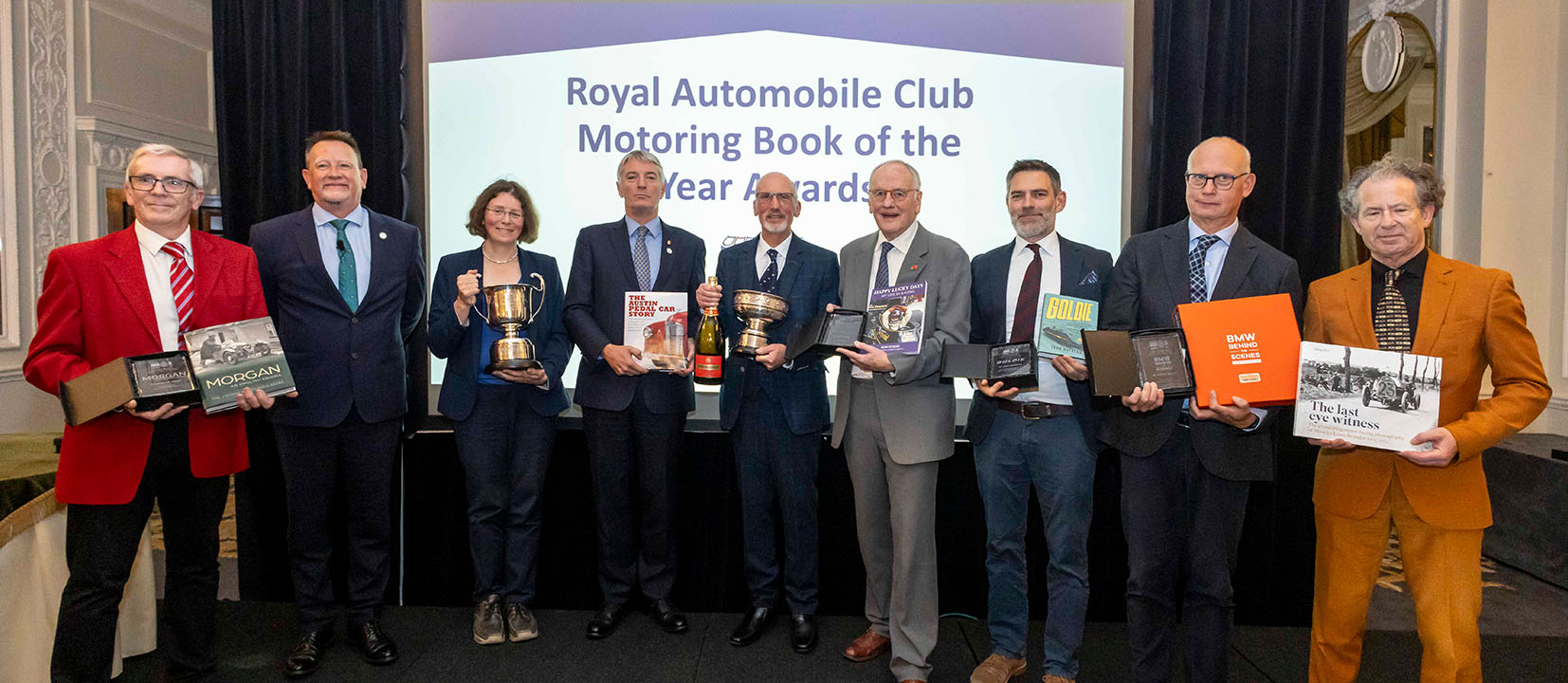
The Austin Pedal Car Story wins Royal Automobile Club 2024 Motoring Book of the Year Award David Whyley’s The Austin Pedal Car Story, published by Porter Press International, emerged as the Royal Automobile Club’s 2024 Motoring Book Of The Year at a special ceremony in central London last night, in the presence of acclaimed motoring and motor racing authors from around the world. This exhaustive, entertaining and beautifully produced book chronicles the story of how the Austin Motor Company provided much-needed work for disabled former miners in South Wales, building small-scale versions of its roadgoing cars for lucky children. The Austin Pathfinder and J40 cars were made from 1949 to 1971. Today the originals are highly sought-after by collectors. They have recently gone back into production, and there is an annual race for them – called the Settrington Cup – at the Goodwood Festival of Speed. They rely entirely on pedal-power, with the fittest legs making them go the fastest. So this is the first time a book on cars without engines has won outright at the Awards, now in its 11th straight year and regarded as the ‘Oscars’ of the car book world. David Whyley is acknowledged as an Austin expert. He grew up near the company’s headquarters in Longbridge, Birmingham, and has spent decades researching the work, which involved interviews with many of the people involved at the time. It also includes numerous previously unseen photos. Accepting his award for The Austin Pedal Car Story, assessed by a panel of expert independent judges, he said: “To me, this book was all about securing future interest in our history, and I felt I needed to tell the story of how the motor industry helped the people of the Welsh Valleys. “I began researching this in the mid-1990s, and I was fortunate enough to meet the designer as part of that – I couldn’t believe what he had to show me, and so I was gifted the opportunity to write about these miniature marvels.” Jeremy Vaughan, Head of Motoring at the Royal Automobile Club, commented: “The range of titles under consideration is so wonderfully varied this year, perhaps more so than for any year since we started these Awards back in 2013. “David’s book may be about cars that none of us will ever drive on the roads, but the approach he’s taken to his subject, and the incredible detail he’s amassed and catalogued, is as accomplished as any definitive marque history. “Here at the Club, we love to play our part in recognising excellence in book publishing, and we’re lucky to have judges who are open-minded, knowledgeable and, of course, completely independent. I thank them all for their contributions” This was by no means the only book to scoop an accolade last night. Other books to win on the night (topping categories with and without a £50.00 price limit) included: Morgan: An English Enigma by Martyn Webb; BMW: Behind The Scenes by Steve Saxty; Goldie by John Mayhead; and The Last Eyewitness by Doug Nye. The Graham Robson Award for Best Debut Author was presented to Bob Evans for Happy Lucky Days: My Life in Racing. Full details of all the winners are listed below. Sharing the history-rich limelight at the Royal Automobile Club on Wednesday evening was Dr Clare Hay, who was presented with a Lifetime Achievement Award for her significant contribution to the UK’s motoring book industry. Her first book, the highly acclaimed Bentley: The Vintage Years, was published in December 1986, not long after her 23rd birthday. Her ten subsequent titles on the marque and the work of Walter Owen Bentley have cemented her reputation as the pre-eminent world authority on vintage Bentley cars. Dr Hay told the audience movingly of her early life, and the grip that her subject took on her. Receiving £3000 from an insurance payout after being knocked off her bicycle, Dr Hay was able to buy her own Bentley 3 Litre as a wreck in Scotland – at a time when she didn’t have a driving licence or any means to get it home. She added that “Nobody took any interest in me or what I was doing.” But within a very short time, she had become the leading authority on vintage Bentleys, with unparalleled knowledge on each of the 3000 individual cars produced, and consulted by renowned collectors, including Ralph Lauren.
ROYAL AUTOMOBILE CLUBS SIMMS MEDAL AWARDED TO MAEVING
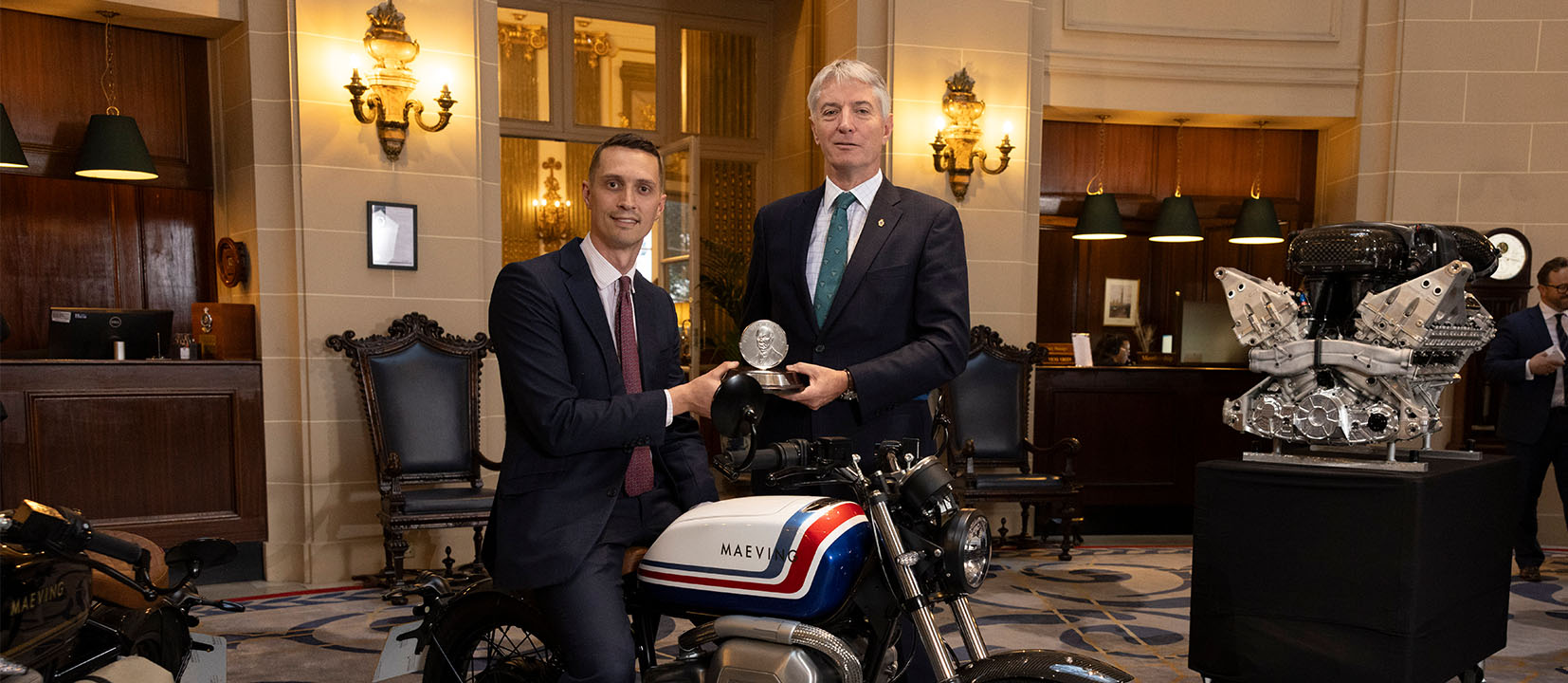
Royal Automobile Club’s Simms Medal awarded to Maeving For its innovative electric motorbikes designed and built in Britain The Simms Medal, named after the Club’s founder, was presented to Seb Inglis-Jones, who co-founded Maeving in 2018 with Will Stirrup to open a new era for the British motorcycle industry. In the year the two friends founded their business, just 297 electric motorbikes were sold in the UK, while over 20m of them found buyers in China. However, the partners’ plan to import and sell Chinese-made models for the British market was soon parked when they decided the quality wasn’t good enough, and that removable batteries were key for ease of use in town and beyond. In 2023 Maeving launched its first models, the RM1 and RM1S and the initial batch sold out within hours. It immediately became the best-seller in its sector. Following the tradition of legendary motorcycle names including Triumph, Norton and BSA, Maeving opened its factory in the West Midlands, in Coventry, and in doing so became Britain’s first electric motorcycle manufacturer. Inglis-Jones and Stirrup met and bonded at Durham University and decided that one day they would open a business together. But the idea for an electric motorbike only came when Inglis-Jones bought one for his daily commute. “We questioned why electric motorbikes lagged in sales and identified the single most important factor: removable batteries,” said Inglis-Jones. “So our innovation addresses the primary barrier to electric adoption – insufficient charging infrastructure – by allowing riders to power up from any standard socket. “This approach contrasted with what major Western manufacturers were doing: designing heavy, high-powered models that served as alternatives to popular internal combustion-engined motorcycles, but often struggled with reliance on inadequate charging infrastructure.” A deep and shared respect for the planet was another reason why the two gave up their jobs in the corporate world to found Maeving, and since then they have recruited what Inglis-Jones calls “one of the most talent-dense engineering teams in the world, with over 200 years of combined industry experience”, to help them. The team includes Graeme Gilbert, former Head of Product at Triumph. “This idea stemmed from the notable discrepancy in electric two-wheeler sales between the East and West,” Will Stirrup added. “The level of experience and expertise in the Midlands is unparalleled. Harnessing this has made Maeving’s motorcycles the embodiment of craftsmanship and innovation. “The whole Maeving team is thrilled that the Royal Automobile Club recognises our vision with the Simms Medal.” Maeving joins a rollcall of British talent to have received the Simms Medal, which is presented only in years when the judges feel there is a worthy winner. This has included McMurtry Automotive, Williams Advanced Engineering, Riversimple and the Ariel Motor Company, as well as individuals such as Richard Parry-Jones CBE and Dr Rob Lewis OBE. A full list of previous winners is given below. Ben Cussons, Chairman of the judges on the Royal Automobile Club Technical Committee (which awards the Simms Medal alongside the Dewar Trophy) said: “Maeving’s achievement in designing and building an attractive and innovative electric motorcycle in the UK is a project that Frederick Simms would have been proud of. The business exudes the passion of its founders but has the financial backing and commercial nous that will help it achieve its ambitious aims.” Previous winners of the Simms Medal 2023 – Alex Summers for his P4t hillclimb car. 2022 – McMurtry Automotive for the conception, design and manufacture of the stunning McMurtry Spéirling, 2021 – Dr Rob Lewis OBE for the development of the Catesby Tunnel Test Facility and the associated Innovation Centre. 2019 – Zef Eisenberg: a man driven by technology and demonstrating its potential in the most extreme manner. 2017 – HIPERCAR Consortium for the development of the HIPERCAR. 2016 – Riversimple for the development of the Rasa hydrogen fuel cell electric car. 2015 – Williams Advanced Engineering for the design, development and production of the battery powering Formula E racing cars. 2013 – Lord Paul Drayson for setting four Electric World Land Speed Records for sub-999kg vehicles. 2012 – Ben Bowlby for his brilliant realisation of the groundbreaking DeltaWing racing car. 2009 – World Steam Land Speed Record team, with a special dedication to former Project Manager, the late Mr Frank Swanston, for breaking the 103-year-old world record and raising it to an average of 148.308mph for two consecutive runs over a measured kilometre. 2007 – Richard Parry-Jones CBE, in recognition of his immense contribution to the UK and world automobile industry (as the Ford Motor Company Group Vice President and Chief Technical Officer). 2006 – Bill Gibson of Zytek, for developments in the fields of motorsport and electric vehicles. 2005 – Simon Saunders of Ariel Motor Company for designing the Ariel Atom sports car. 2004 – Professor Gary Savage of the BAR Formula 1 team for its carbon fibre gearbox. 2003 – Mick Hyde of Radical Motorsport for the SR3 sports racing car.
THE ROYAL AUTOMOBILE CLUB AWARDS COSWORTH THE 2024 DEWAR TROPHY
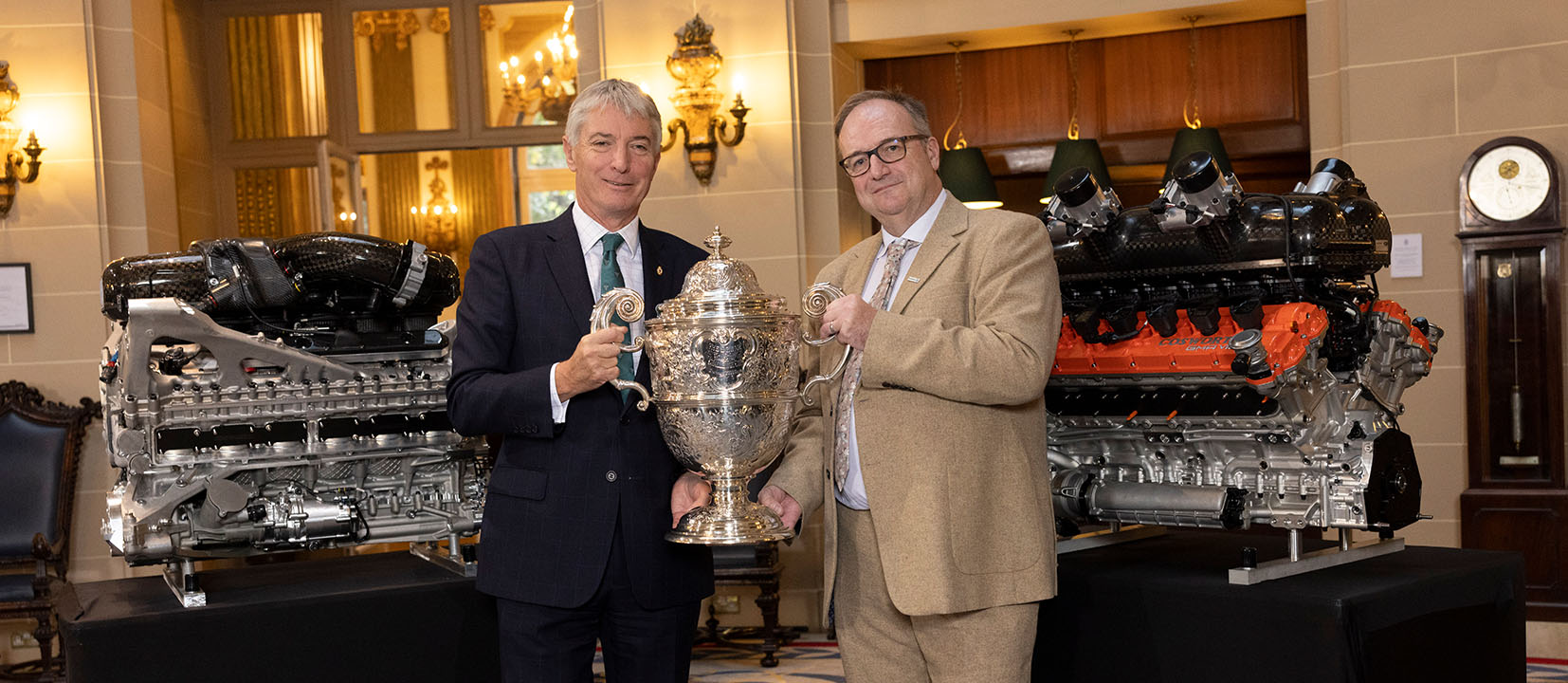
The Royal Automobile Club awards Cosworth the 2024 Dewar Trophy The Royal Automobile Club’s coveted Dewar Trophy was awarded to revered British manufacturer Cosworth, for developing ultra-high-performance internal-combustion engines to power some of the world’s most exciting ‘hypercars’. The Northamptonshire-based company, whose history runs in parallel with Britain’s rising dominance since the 1960s of Formula 1, was highly praised by the Dewar Trophy judging panel. Not only for the design, development and manufacture of normally-aspirated engines that give extraordinary levels of performance, but also for the business strategy behind them. The power units are at the heart of the most exciting road cars of this automotive era, including the Aston Martin Valkyrie, Red Bull RB17 and Gordon Murray Automotive (GMA) T50. Cosworth is also producing the V16 engine for Bugatti’s upcoming Tourbillon hypercar. Commenting on the Dewar Trophy award, Dr Florian Kamelger, Cosworth CEO, said: “We are incredibly proud to receive the Dewar Trophy. It is a testament to the hard work of our talented team and the innovative solutions we are bringing to market. As we continue to evolve and redefine the future of luxury automotive performance, this recognition underscores Cosworth’s commitment to delivering technologies that are at the forefront of automotive excellence. “What sets Cosworth apart is, I believe, our strategic and process-driven engineering approach, one that ensures excellence in both the final product and the way it’s conceived, designed, and brought to life.” The Dewar Trophy has been associated with numerous British automotive design achievements over many decades. Named after Sir Thomas Dewar, it was originally presented in 1904 and today It is awarded for ‘An outstanding British technical achievement in the automotive industry.’ It is awarded at the discretion of the Royal Automobile Club’s Technical Committee, in any year when its panel of experts believe there are contenders of sufficient merit. Previous winners have included Dunlop, Jaguar, Ford, YASA and JCB. Cosworth won it for the first time in 1969 for the performance of its DFV Formula 1 power unit. Bruce Wood, Managing Director of Cosworth, added: “Our recent collaborations with some of the world’s most prestigious automotive and motorsport brands have been pivotal in securing the Dewar Trophy and further highlight Cosworth’s leadership in high-performance automotive engineering. “We believe that the obituary for internal combustion engines is being written prematurely; while electric mobility is part of the future roadmap, there remains a crucial space for high-performance internal combustion engines in niche applications such as hypercars.” Cosworth’s highly advanced engines are very high-revving and produce exceptionally high specific power outputs. Yet they also have to be manufactured in numbers that would be too large for most specialists, and too small for a major carmaker. Today, Cosworth’s commitment to innovation is reflected in its continuous investment in state-of-the-art development technologies and capabilities. Through developing the ability to design, prototype and manufacture these production road car units, Cosworth has shown true innovation, and is another great British success story worthy of the Dewar Trophy accolade. Ben Cussons, Chairman of the Dewar Technical Committee, said: “It is testament to the innovative nature of the British motor industry that the Royal Automobile Club is able to award the Dewar Trophy to a previous winner. Fifty-five years since it last won, Cosworth has demonstrated how it has used its outstanding design, development and manufacturing capability to become the world leader in normally aspirated ICE hypercar powertrain production. Truly an organisation that never rests on its laurels.”